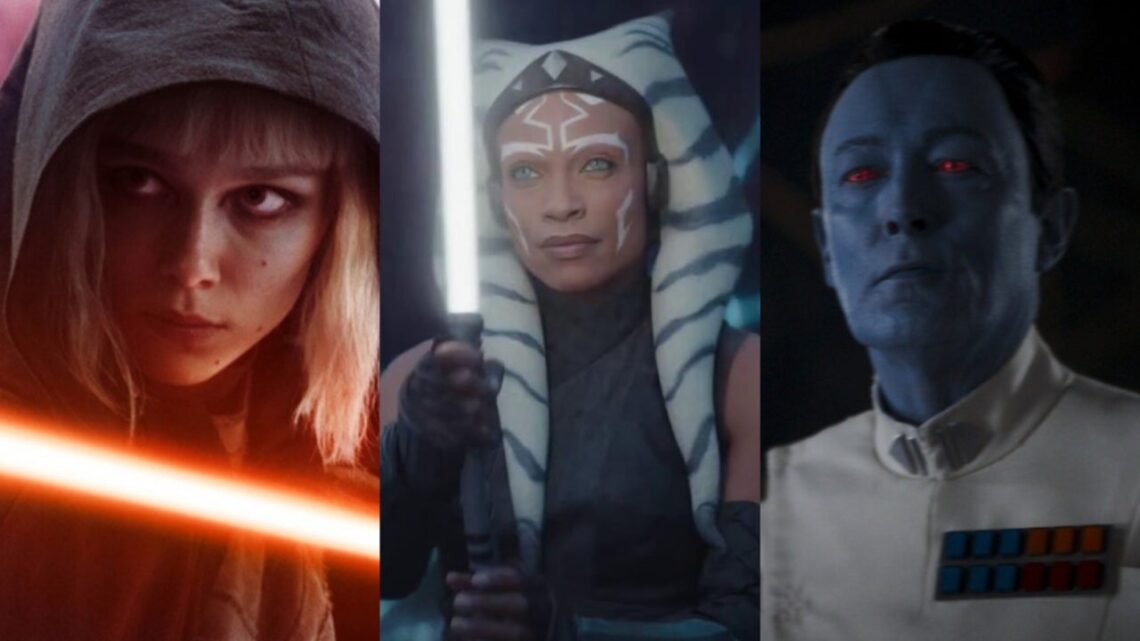
The Star Wars universe has always thrived on memorable characters, layered performances, and actors who understand the emotional weight of mythic storytelling. When Ahsoka arrived, it carried high expectations from longtime fans and newcomers alike. The series needed performers capable of honoring decades of lore while also carving out something bold and personal. What emerged was a carefully assembled ensemble that balanced legacy, freshness, and emotional depth. The Ahsoka Cast stands at the center of that achievement, turning familiar names and new faces into a living, breathing chapter of the galaxy far, far away.
The Ahsoka Cast and the Heart of the Story
At its core, the show is driven by relationships, memory, and consequence. The actors are not simply portraying heroes and villains; they are embodying histories shaped by war, loss, loyalty, and hope. The Ahsoka Cast was chosen not just for star power, but for the ability to communicate inner conflict with restraint and authenticity. Every performance feels intentional, grounded in character rather than spectacle, allowing the narrative to unfold with emotional clarity.
Rosario Dawson as Ahsoka Tano
Rosario Dawson’s portrayal of Ahsoka Tano anchors the series with quiet strength. She brings a calm authority that reflects years of experience, pain, and growth. Her performance avoids exaggerated heroics, instead focusing on subtle expressions and controlled movement. This Ahsoka is reflective, burdened by the past, yet still guided by compassion.
Dawson’s ability to convey emotional weight without excessive dialogue makes her presence commanding. Whether in moments of stillness or combat, she communicates the cost of survival in a broken galaxy. Her interpretation bridges animation and live-action seamlessly, giving fans a version of Ahsoka that feels both familiar and evolved.
Natasha Liu Bordizzo as Sabine Wren
Sabine Wren’s journey is one of identity, creativity, and unresolved grief. Natasha Liu Bordizzo captures Sabine’s rebellious spirit while revealing vulnerability beneath the armor. Her performance highlights a character struggling between independence and connection, art and warfare, freedom and responsibility.
Bordizzo’s chemistry with Dawson is essential to the show’s emotional rhythm. Their shared scenes are layered with unspoken history, tension, and mutual respect. Sabine’s arc feels deeply human, grounded in mistakes and perseverance rather than idealized heroism.
Mary Elizabeth Winstead as Hera Syndulla
Hera Syndulla represents leadership shaped by empathy. Mary Elizabeth Winstead portrays her with warmth, discipline, and emotional intelligence. Hera is not defined solely by command; she is a protector, strategist, and emotional anchor for those around her.
Winstead’s performance avoids grandstanding. Instead, she focuses on subtle authority and moral clarity. Hera’s presence brings stability to the narrative, reminding viewers that leadership often means carrying burdens quietly and making impossible choices with grace.
Ray Stevenson as Baylan Skoll
One of the most compelling performances in the series comes from Ray Stevenson as Baylan Skoll. His portrayal is marked by restraint, gravitas, and philosophical depth. Baylan is not driven by chaos or cruelty but by a personal code shaped by loss and disillusionment.
Stevenson gives the character a weary dignity, making every line and gesture feel considered. His presence introduces moral ambiguity rarely seen in traditional antagonists. Baylan’s quiet intensity adds thematic weight, challenging simplistic ideas of good and evil.
Ivanna Sakhno as Shin Hati
As Baylan’s apprentice, Shin Hati is defined by tension between obedience and curiosity. Ivanna Sakhno plays her with controlled volatility, suggesting a character on the edge of transformation. Her expressions often reveal internal conflict, hinting at questions she cannot yet voice.
Sakhno’s performance complements Stevenson’s perfectly, creating a mentor-student dynamic rooted in shared uncertainty. Shin feels unpredictable, making her scenes quietly suspenseful without relying on exaggerated menace.
Eman Esfandi as Ezra Bridger
Ezra Bridger’s return carries emotional significance, and Eman Esfandi rises to the challenge with sincerity and warmth. His portrayal reflects a character shaped by isolation, resilience, and spiritual growth. Ezra feels older, calmer, yet still defined by hope.
Esfandi’s performance captures the essence of a hero who has learned patience through hardship. He avoids nostalgia-driven exaggeration, focusing instead on emotional realism. Ezra’s reintroduction feels earned, enriching the narrative rather than overshadowing it.
Lars Mikkelsen as Grand Admiral Thrawn
Lars Mikkelsen brings chilling precision to Grand Admiral Thrawn. His performance is defined by stillness, intelligence, and calculated restraint. Thrawn does not raise his voice or rely on spectacle; his authority comes from certainty and foresight.
Mikkelsen’s portrayal emphasizes intellectual dominance. Every pause feels deliberate, every word measured. Thrawn becomes a presence rather than a spectacle, making him one of the most psychologically intimidating figures in the series.
Supporting Performances That Strengthen the World
Beyond the central figures, the series benefits from a strong supporting ensemble. Each character, regardless of screen time, feels purposeful and grounded. These performances add texture to the world, reinforcing the sense that every action has consequences and every choice echoes across the galaxy.
The casting avoids caricature, favoring authenticity and emotional coherence. This approach ensures that even minor roles contribute meaningfully to the story’s tone and pacing.
The Craft Behind the Performances
What sets this ensemble apart is the shared commitment to subtlety. The performances prioritize internal conflict over external dramatics. Dialogue is often sparse, allowing silence, body language, and expression to carry emotional weight.
The Ahsoka Cast demonstrates a collective understanding of Star Wars as mythic storytelling rather than simple spectacle. Their work respects the franchise’s legacy while pushing it toward a more introspective, character-driven future.
Chemistry and Narrative Balance
Ensemble chemistry is crucial in serialized storytelling, and here it feels organic. Relationships evolve naturally, shaped by shared history and unresolved tension. Scenes rarely feel rushed, giving actors space to explore emotional nuance.
The balance between legacy characters and new additions is handled with care. No performance overwhelms the others; instead, each contributes to a cohesive emotional landscape.
Representation and Modern Storytelling
The casting also reflects a commitment to diversity without making it performative. Characters are defined by personality and purpose rather than symbolism. This approach allows representation to feel natural, integrated into the story rather than highlighted separately.
Such thoughtful casting strengthens audience connection, inviting viewers from different backgrounds to see themselves reflected in meaningful ways.
Why the Ensemble Resonates With Audiences
Audience response has consistently highlighted the emotional depth of the performances. Viewers connect not just with action sequences, but with moments of hesitation, regret, and quiet determination. These elements give the series its distinctive tone.
The Ahsoka Cast succeeds because it trusts the audience. It does not over-explain emotions or rely on constant spectacle. Instead, it allows characters to exist as complex individuals shaped by history and choice.
A Living Extension of Star Wars Legacy
Star Wars has always been about generational storytelling. This ensemble honors that tradition by embracing continuity without becoming constrained by it. Performances reference the past while remaining firmly rooted in the present narrative.
The actors approach their roles with respect rather than imitation, ensuring that characters feel lived-in rather than recreated. This balance keeps the story accessible while rewarding longtime fans.
Conclusion
The success of Ahsoka rests not only on its visual scope or narrative ambition, but on the strength of its performances. Through careful casting and disciplined acting, the series achieves emotional resonance rarely seen in large-scale franchises. The Ahsoka Cast brings authenticity, restraint, and humanity to a mythic world, reminding viewers that even in a galaxy defined by epic conflict, the most powerful stories are rooted in character. Their collective work ensures that Ahsoka is not just a continuation of Star Wars lore, but a meaningful evolution of it.