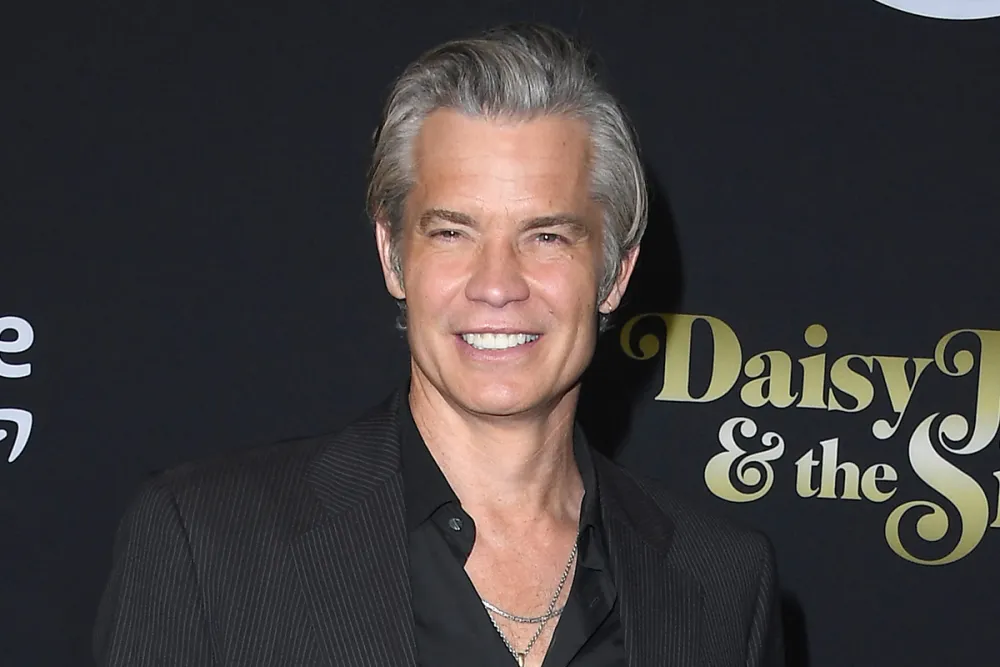
There are actors who chase reinvention, and then there are actors who quietly become it. Timothy Olyphant belongs to the latter group. His career is defined not by abrupt transformations, but by a steady sharpening of presence—an ability to command a scene without forcing attention. Whether playing lawmen, outlaws, or characters who exist somewhere in between, his work carries a relaxed authority that feels earned rather than performed.
What makes him compelling is not volume, but timing. He knows when to lean in, when to pull back, and when to let silence do the work. Over decades in film and television, he has built a reputation for characters who feel lived-in, self-aware, and grounded in emotional truth. The result is a body of work that resists easy categorization and rewards close attention.
Timothy Olyphant and the Power of Effortless Presence
From the moment Timothy Olyphant appears on screen, there is a sense of control that never tips into stiffness. His posture is loose, his delivery unhurried, yet the tension underneath is unmistakable. This balance has become a defining feature of his performances, particularly in roles that require authority without arrogance.
He often plays characters who are confident but not loud, dangerous but not chaotic. That restraint creates space for nuance. Viewers are drawn not to what he does overtly, but to what he might do next. The unpredictability is subtle, and that is precisely why it works.
Early Foundations and Career Direction
Before his most recognized roles, his career unfolded gradually. Early work across film and television allowed him to explore a wide range of tones—from comedy to drama—without becoming trapped in a single mold. These formative years shaped an actor comfortable with risk, yet anchored in discipline.
Rather than racing toward stardom, he let opportunities accumulate. Each role added texture, refining an instinct for character over spectacle. This patience laid the groundwork for performances that would later feel both confident and deceptively simple.
The Calm That Commands Attention
Many actors rely on intensity to signal importance. His approach is different. Calm becomes the hook. When he speaks softly, the audience listens more closely. When he pauses, the silence feels intentional rather than empty.
This control over tempo allows scenes to breathe. It also makes moments of confrontation far more effective. When emotion finally surfaces, it lands with clarity because it has not been overused.
Characters Built on Moral Ambiguity
One of the most consistent threads in his work is moral complexity. Heroes are never spotless, and antagonists are rarely one-dimensional. Timothy Olyphant excels at occupying that gray space, where charm and threat coexist comfortably.
His characters often understand the rules of their world better than anyone else—and choose when to follow them. That awareness creates tension. The audience senses intelligence at work, even in moments of apparent ease.
Authority Without Explanation
He rarely explains power; he embodies it. A glance, a shift in stance, or a measured line delivery often replaces exposition. This economy of expression respects the audience, trusting them to read between the lines.
Because of this, his characters feel authentic rather than constructed. They seem to exist before the story begins and continue after it ends.
Humor as a Pressure Valve
Dry humor is another signature element. It appears not as punchlines, but as understated remarks that cut through tension. This wit humanizes his characters, making them relatable even when they operate in extreme circumstances.
The humor never undermines stakes. Instead, it sharpens them, reminding viewers that intelligence and self-awareness can be as dangerous as brute force.
Television as a Long-Form Canvas
While film introduced him to wide audiences, television provided the space for deeper exploration. Long-form storytelling allowed his characters to evolve slowly, revealing contradictions and growth over time.
In serialized narratives, Timothy Olyphant thrives. He understands how to pace a performance across seasons, letting changes accumulate naturally. Authority shifts, relationships deepen, and moral lines blur—all without abrupt turns.

Consistency Across Seasons
Maintaining character integrity over years requires discipline. He achieves this by anchoring performances in clear internal logic. Even when circumstances change, motivations remain coherent.
This consistency builds trust with viewers. They may be surprised by choices, but those choices always feel earned.
Chemistry and Collaboration
Strong ensemble work depends on generosity, and his performances reflect that. He listens as much as he speaks, allowing scene partners room to shine. This creates believable dynamics rather than one-sided dominance.
Such collaboration strengthens the entire narrative. Power feels distributed, conflicts feel mutual, and scenes gain depth.
Film Roles and Strategic Variety
In film, his choices reveal a preference for contrast. Instead of repeating success, he gravitates toward roles that challenge perception. Supporting characters are given as much care as leads, often stealing scenes through precision rather than scale.
Timothy Olyphant does not overplay significance. He allows context to do the work, stepping forward only when necessary. This restraint makes even brief appearances memorable.
Genre as a Tool, Not a Cage
Action, western, comedy, drama—genre becomes a framework rather than a limit. He adapts tone without losing identity, adjusting rhythm and intensity to match the story.
This flexibility keeps his career fluid. Audiences recognize him instantly, yet rarely feel they are seeing the same performance twice.
Presence Over Transformation
Unlike actors who rely on extreme physical changes, his transformations are internal. Voice, posture, and timing shift subtly, signaling new characters without spectacle.
This approach emphasizes craft over gimmickry, reinforcing longevity.
Public Persona and Professional Balance
Off screen, his demeanor mirrors his on-screen ease. Interviews reveal a grounded perspective on fame and work. There is confidence without self-importance, humor without deflection.
This balance reinforces credibility. He appears comfortable with success but not defined by it, focused on the process rather than the spotlight.
Longevity Through Selectivity
Sustaining relevance over decades requires careful choices. By prioritizing quality over quantity, he avoids fatigue—both personal and audience-driven.
Each new project feels intentional, contributing to a coherent body of work rather than diluting it.
Influence Without Imitation
Younger actors often cite his performances as benchmarks, not because they are flashy, but because they are controlled. The lesson is clear: restraint can be powerful, and confidence does not need volume.
A Career Defined by Control and Trust
At this stage, Timothy Olyphant represents something increasingly rare: an actor trusted by audiences to deliver without spectacle. His work reminds viewers that tension can be quiet, authority can be relaxed, and charisma can be understated.
He does not chase relevance; he sustains it. By respecting story, character, and audience intelligence, he has built a career that feels both modern and timeless. In an industry driven by noise, his greatest strength remains the confidence to stay calm—and let the work speak.
FAQs
Who is Timothy Olyphant best known for?
He is best known for portraying calm, authoritative characters in television and film, particularly roles that balance charm, intelligence, and moral complexity.
What makes his acting style distinctive?
His acting style is defined by restraint, precise timing, dry humor, and an ability to command attention without raising his voice or relying on exaggerated emotion.
Has he worked more in television or film?
He has achieved strong recognition in both, but long-form television allowed him to develop deeper, more layered characters over time while maintaining a consistent presence in film.
Why are his characters often morally complex?
He gravitates toward roles that exist in gray areas, where characters make thoughtful choices shaped by circumstance rather than clear-cut heroism or villainy.
What contributes to his long-lasting career?
Careful role selection, strong collaboration skills, and a focus on craft over publicity have helped him remain relevant and respected across decades.