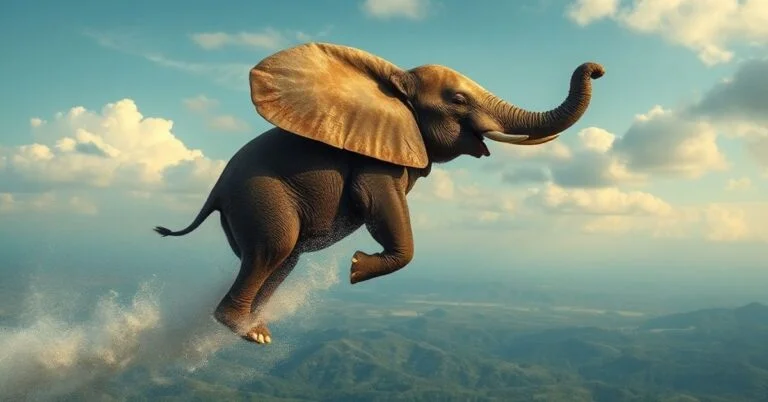
There’s something oddly compelling about stories that don’t quite make sense at first glance. The flying elephant memoirs of an olympic champion is one of those phrases that feels like a riddle—half dream, half reality. You pause, reread it, maybe even smile a little. An elephant that flies? An Olympic champion writing memoirs about it? What could that possibly mean?
But maybe that’s the point. Not everything meaningful arrives neatly packaged. Some stories need a bit of imagination, a willingness to wander into the unusual. And as it turns out, this strange title carries a surprisingly powerful narrative about ambition, resilience, and the invisible weight champions carry.
Let’s unpack it together.
The Symbolism Behind The Flying Elephant Memoirs of an Olympic Champion
At first glance, the phrase sounds whimsical, almost absurd. But dig a little deeper, and it starts to feel symbolic—like something an athlete might use to describe the impossible expectations they’ve had to overcome.
Think about it. An elephant is strong, grounded, heavy. It doesn’t fly. It can’t fly. So when it does—at least metaphorically—it represents defying limits, breaking assumptions, and rewriting what’s possible.
For an Olympic champion, that metaphor hits close to home.
The Elephant in the Room
Every athlete carries pressure. Expectations from coaches, family, country—sometimes even from strangers who’ve never met them. That pressure can feel enormous, like an elephant sitting squarely on your chest.
And yet, somehow, the best athletes don’t just carry it. They lift it. They transform it. They make it… fly.
Isn’t that what greatness often looks like?
Why “Flying” Matters
Flying suggests freedom. Effortless movement. A kind of grace that hides the years of struggle underneath.
But anyone who’s trained at an elite level knows it’s never effortless. Behind every moment of “flight” is repetition, failure, injury, doubt. The kind of grind that most people never see.
So maybe The flying elephant memoirs of an olympic champion isn’t about fantasy at all. Maybe it’s about the illusion of ease—and the reality behind it.
The Journey to Becoming an Olympic Champion
No one wakes up one day and just… becomes an Olympic champion. That title is built slowly, painfully, often in ways that don’t make for glamorous storytelling.
And yet, those are the parts that matter most.
Early Beginnings: Small Steps, Big Dreams
Most champions start young. Not always because they’re prodigies, but because they’re curious. They enjoy the movement, the rhythm, the simple joy of trying something new.
At that stage, there’s no “flying elephant.” Just a kid, a field, maybe a coach shouting encouragement from the sidelines.
But even then, something begins to take shape. A quiet determination. A willingness to try again after failing. That’s where the foundation is laid.
The Grind No One Talks About
Here’s the thing about success—it looks clean from the outside. Medals, podiums, national anthems.
But the path to get there? It’s messy.
There are mornings when the body refuses to cooperate. Injuries that don’t heal on schedule. Competitions lost by fractions of a second. Moments where quitting feels not just tempting, but logical.
And yet, champions continue. Not because it’s easy, but because they’ve learned to carry their “elephant” differently.
Inside The Flying Elephant Memoirs of an Olympic Champion
Memoirs, by nature, are personal. They’re less about facts and more about perspective—how events felt, what they meant, how they changed the person experiencing them.
In The flying elephant memoirs of an olympic champion, the narrative would likely blur the line between literal and metaphorical storytelling. And honestly, that’s where it gets interesting.
Memory Isn’t Always Linear
Athletes don’t remember their journeys in neat timelines. One moment blends into another. A childhood memory might sit right next to an Olympic final in their mind.
And sometimes, the most vivid memories aren’t the victories—they’re the struggles leading up to them.
That’s where the “flying elephant” could reappear. Not as a literal event, but as a recurring symbol. A reminder of the impossible odds they faced.
The Emotional Weight of Success
Winning isn’t always the end of the story. In fact, it can complicate things.
After achieving something as monumental as an Olympic victory, athletes often face a strange question: What now?
The dream that once drove them forward is suddenly behind them. The world celebrates, but internally, there’s a quiet shift—sometimes even a sense of emptiness.
It’s not something people talk about often, but it’s real. And it would likely play a significant role in The flying elephant memoirs of an olympic champion.
Lessons Hidden in the Story
What makes a memoir like this compelling isn’t just the achievements—it’s the lessons woven through them.
And there are quite a few.
Embracing the Impossible
The idea of a flying elephant sounds ridiculous. Until it doesn’t.
Athletes constantly push beyond what seems reasonable. They train their bodies and minds to operate at levels most people wouldn’t consider possible.
That’s the first lesson: sometimes, the impossible is just something that hasn’t been done yet.
Redefining Strength
Strength isn’t just physical. It’s mental, emotional, sometimes even quiet.
It’s showing up when no one is watching. It’s continuing after failure. It’s admitting vulnerability in a world that expects perfection.
In that sense, the “elephant” isn’t just a burden—it’s also a source of strength.
Letting Go of Perfection
Ironically, chasing perfection can hold you back.
Many champions eventually realize that mistakes are part of the process. That progress isn’t linear. That some of the best moments come from unexpected detours.
And maybe that’s where the “flight” happens—not in flawless execution, but in the willingness to keep going anyway.
The Human Side of Champions
It’s easy to forget that Olympic champions are, well, human.
We see the highlights, the polished interviews, the triumphant moments. But behind all that is someone who experiences doubt, fear, and uncertainty just like anyone else.
The Pressure of Representation
For many athletes, competing isn’t just about personal achievement. It’s about representing their country, their community, sometimes even an entire generation.
That kind of responsibility can be overwhelming.
It adds another layer to the “elephant”—one that’s not just heavy, but deeply personal.
Relationships and Sacrifice
Success often comes at a cost.
Time with family. Friendships. Normal experiences that most people take for granted.
It’s not uncommon for athletes to look back and wonder what they’ve missed along the way. And while they may not regret their choices, there’s often a quiet acknowledgment of the trade-offs.
Why Stories Like This Matter
You might wonder—why does a metaphorical memoir like The flying elephant memoirs of an olympic champion resonate so much?
Because it reflects something universal.
We all carry our own “elephants.” Maybe not Olympic-level pressure, but challenges that feel just as heavy in our own lives.
And we all, in our own ways, try to make them fly.
Relatability Beyond Sport
You don’t have to be an athlete to connect with this story.
The themes—struggle, growth, resilience—apply to almost every area of life. Whether it’s career, relationships, or personal goals, the journey is often similar.
There are moments of doubt. Moments of clarity. And occasionally, moments that feel like flying.
Inspiration Without Perfection
What makes this kind of narrative powerful is its honesty.
It doesn’t pretend that success is easy or that champions are flawless. Instead, it shows the messy, complicated reality behind the achievements.
And that’s far more inspiring than perfection.
A Different Way to Look at Success
We often define success in terms of outcomes—medals, titles, recognition.
But stories like The flying elephant memoirs of an olympic champion suggest a different perspective.
Success as a Process
Maybe success isn’t just about the destination.
Maybe it’s about the process—the growth, the lessons, the resilience built along the way.
In that sense, even the struggles become meaningful. Even the failures have value.
The Quiet Victories
Not all victories are visible.
Sometimes, the biggest wins happen internally—overcoming fear, building confidence, learning to trust yourself.
Those moments might not make headlines, but they matter just as much.
Conclusion
So what do we make of The flying elephant memoirs of an olympic champion?
At its core, it’s not really about elephants or even flying. It’s about transformation. About taking something heavy, something limiting, and turning it into something powerful.
It’s about the journey of becoming—not just as an athlete, but as a person.
And maybe that’s why the phrase lingers. It’s strange, yes. A little unpredictable. But also oddly fitting.
Because in life, just like in sport, we’re all carrying something. And every once in a while, if we’re lucky—or persistent, or brave—it lifts.