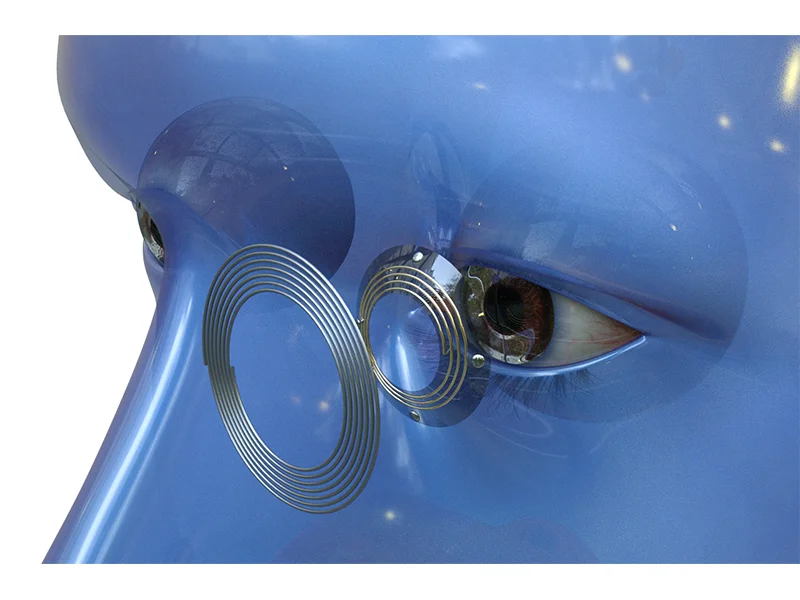
Modern medicine relies heavily on the ability to communicate complex biological processes and medical procedures with clarity and precision. Many aspects of the human body operate at scales that cannot be easily observed—from microscopic cellular activity to intricate surgical techniques. Medical illustrations and animations have become essential tools that transform complicated scientific knowledge into understandable visual information for healthcare professionals, students, and patients.
The Foundation of Medical Illustration
Medical illustration is a specialized discipline that combines artistic technique with scientific knowledge. Unlike traditional art, its primary goal is not aesthetic expression but accurate communication of medical information. Illustrators carefully study anatomical structures, clinical procedures, and scientific research in order to create visuals that convey complex information clearly and effectively.
One of the key advantages of medical illustration is its ability to emphasize specific structures while removing unnecessary detail. Photographs often capture too much information, which can make it difficult to focus on what is most important. An illustration, however, can isolate an organ, highlight pathways such as nerves or blood vessels, and simplify surrounding anatomy to improve understanding.
Medical illustrations appear in textbooks, academic journals, educational platforms, and clinical presentations. They help medical students learn anatomy, assist researchers in explaining discoveries, and support physicians when communicating diagnoses and treatments to patients. Because they combine scientific accuracy with visual clarity, these illustrations remain indispensable throughout the healthcare system.
Medical Animations: Explaining Dynamic Processes
While illustrations provide detailed static views, medical animations introduce movement and time into the visualization process. Many biological systems involve dynamic interactions that cannot be fully explained through still images alone. Animations allow viewers to observe these processes as they unfold.
For example, animations can demonstrate how blood flows through the chambers of the heart, how neurons transmit signals, or how viruses invade cells. They can also illustrate the mechanism of action of pharmaceuticals, showing how a drug interacts with molecular targets inside the body. By presenting these processes step by step, animations make complex medical concepts easier to understand.
Medical animations are widely used in educational environments. Students can watch physiological processes in motion, which often leads to better comprehension and memory retention. In clinical practice, animations are frequently used to help patients understand procedures such as joint replacements, cardiac interventions, or cancer treatments.
Applications Across Healthcare and Science
Medical illustrations and animations support a wide range of professional and educational activities within healthcare:
Medical Education
Universities and training programs rely on visual materials to teach anatomy, physiology, pathology, and surgical techniques. Visual learning tools improve comprehension of spatial relationships within the body.
Clinical Communication
Physicians use diagrams and animated visuals to explain medical conditions and treatment options to patients, helping them better understand their health and participate in decision-making.
Research and Scientific Publications
Researchers frequently use diagrams and graphical abstracts to summarize complex findings. Visual elements allow readers to quickly grasp the structure of experiments and the significance of results.
Pharmaceutical and Biotechnology Industries
Animations are commonly used to demonstrate how new drugs or medical devices function at the molecular or cellular level. These visualizations help communicate scientific concepts to healthcare professionals, investors, and regulatory organizations.
Public Health Communication
Clear visuals play a critical role in public education campaigns. Illustrations and animations can explain disease transmission, prevention strategies, and vaccination mechanisms in ways that are accessible to a general audience.
Technological Innovation in Medical Visualization
Advances in digital technology have significantly expanded the possibilities for medical visualization. Three-dimensional modeling tools allow illustrators and animators to create detailed anatomical structures that can be rotated, dissected, and animated. These models provide highly realistic representations of biological systems.
Virtual reality (VR) and augmented reality (AR) are also becoming valuable educational tools. Medical students can explore immersive anatomical environments and simulate procedures in controlled digital settings. These technologies improve spatial awareness and help prepare professionals for real-world clinical situations.
Artificial intelligence is beginning to assist in generating anatomical models from medical imaging data such as CT or MRI scans. This integration of imaging and visualization technologies enables faster production of accurate educational materials.
Interactive digital platforms are another emerging trend. Users can manipulate visual models, explore different layers of anatomy, and observe physiological processes from multiple perspectives. Such interactivity supports deeper engagement and more effective learning.
Collaboration Between Science and Visual Design
The creation of effective medical illustrations and animations requires collaboration between scientists, healthcare professionals, and visual artists. Medical experts provide technical accuracy and ensure that information reflects current scientific knowledge. Illustrators and animators apply design principles that guide the viewer’s attention and simplify complex ideas.
This partnership ensures that visual materials are not only scientifically correct but also accessible to diverse audiences. The result is a form of communication that transcends language barriers and educational backgrounds.
Conclusion
Medical illustrations and animations have become fundamental components of modern healthcare communication. They enable scientists and medical professionals to present complex ideas clearly, enhance the education of future healthcare providers, and help patients understand their own health conditions.
As digital technologies continue to evolve, the impact of visual communication in medicine will only grow. By combining scientific precision with visual storytelling, medical illustrations and animations help transform complex medical knowledge into information that is accessible, engaging, and meaningful for audiences around the world.