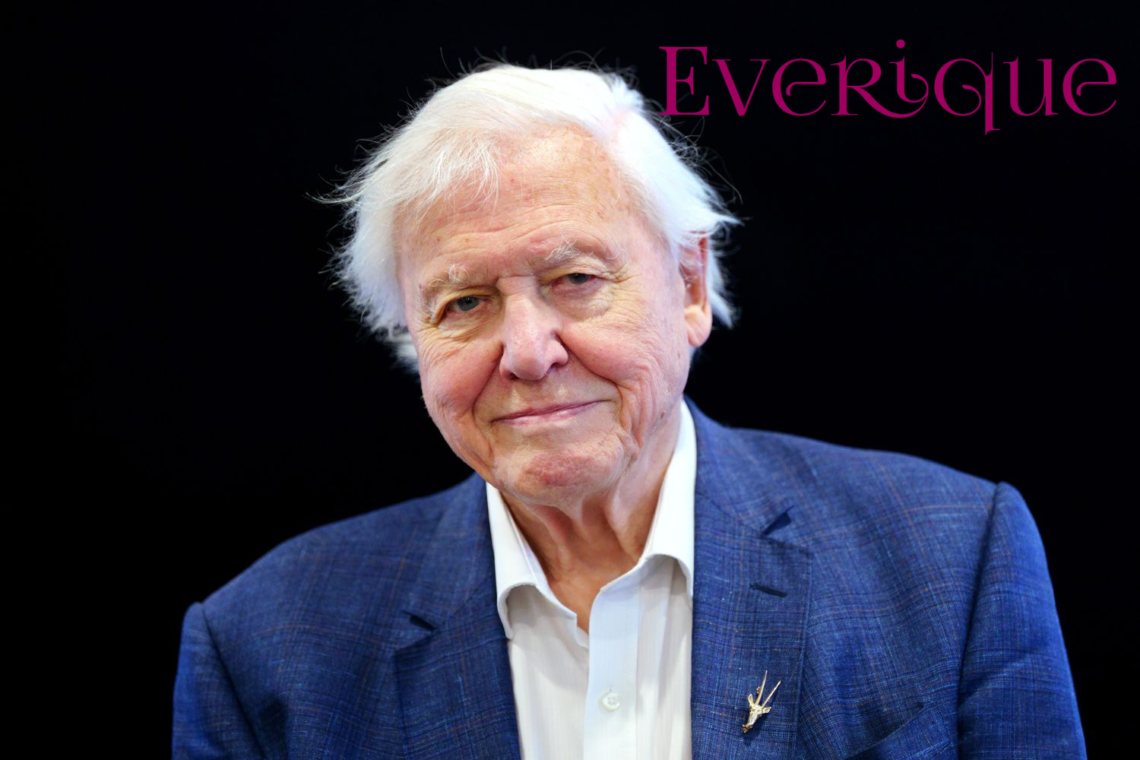
There are some voices you recognize instantly, even before you see the face behind them. For millions of people around the world, that voice belongs to sir david attenborough. Calm, curious, and filled with genuine wonder, he has spent decades inviting us into forests, oceans, deserts, and mountains that many of us will never visit in person. Somehow, he makes even the smallest insect feel as fascinating as the largest whale.
It’s easy to think of him simply as a television presenter, but that hardly tells the whole story. His work has inspired generations to look more closely at the natural world and, perhaps more importantly, to care about it. In an age where distractions are endless, his ability to capture attention with the quiet beauty of nature feels surprisingly rare.
Sir David Attenborough and His Extraordinary Journey
Every remarkable career has a beginning, and David Attenborough’s story started long before television made him a household name.
Born on May 8, 1926, in London, England, he spent much of his childhood surrounded by curiosity. His family encouraged learning, and he developed an early fascination with fossils, rocks, and wildlife. Many children collect interesting objects from nature, but for him, that fascination never faded.
He later studied Natural Sciences at the University of Cambridge, where his passion for biology and geology became even stronger. Although he initially considered a scientific career, life had other plans. Television was still a young medium, and it offered an unexpected opportunity to combine education with storytelling.
That decision would eventually change the way the world experienced wildlife.
A Career That Changed Nature Broadcasting
When Attenborough joined the BBC in the early 1950s, wildlife programs looked very different from what audiences enjoy today. Most productions relied on simple studio presentations, and filming animals in distant locations was extremely difficult.
He believed there had to be a better approach.
Instead of bringing nature into a television studio, he wanted cameras to travel into the natural habitats where extraordinary events actually happened. It sounds obvious now, but at the time, it was a bold idea.
As technology improved, so did the possibilities. High-definition cameras, underwater equipment, drones, and advanced filming techniques allowed viewers to witness breathtaking moments that had rarely, if ever, been captured before.
His commitment to authenticity became one of his greatest strengths. Rather than relying on dramatic exaggeration, he trusted that nature itself was compelling enough.
And he was right.
The Documentaries That Inspired Millions
Life on Earth
One of Attenborough’s most influential achievements came with Life on Earth in 1979.
The series explored the history of life across the planet, introducing viewers to an astonishing variety of species while explaining evolution in a way that felt engaging rather than overwhelming. It wasn’t just educational—it was genuinely entertaining.
Many people still consider it one of the greatest nature documentaries ever produced.
The Blue Planet
The oceans have always held an air of mystery, and The Blue Planet helped reveal their hidden beauty.
Viewers watched creatures living thousands of meters below the surface, glowing in darkness or surviving under incredible pressure. Suddenly, places that seemed impossibly distant felt surprisingly familiar.
The series also reminded audiences how little humanity truly understands about the sea.
Planet Earth
Perhaps no documentary series transformed wildlife filmmaking more than Planet Earth.
Its stunning cinematography captured dramatic mountain landscapes, vast deserts, dense rainforests, and frozen polar regions with breathtaking clarity.
The unforgettable footage of snow leopards, birds of paradise, and hunting wolves demonstrated what patience, technology, and careful planning could accomplish.
For many viewers, these scenes sparked a lifelong interest in wildlife.
Blue Planet II and Beyond
Years later, Blue Planet II introduced another important theme.
Alongside beautiful underwater photography came a growing concern about plastic pollution and environmental damage. Images of marine animals struggling with waste had a profound emotional impact on audiences worldwide.
Sometimes facts alone don’t change minds.
Stories often do.
A Gift for Storytelling
Many wildlife experts understand animals.
Far fewer know how to explain them in ways that everyone can appreciate.
That’s where Attenborough stands apart.
He rarely speaks as though he is lecturing an audience. Instead, his narration feels like a knowledgeable friend sharing something extraordinary. There is excitement in his voice when a rare bird performs an elaborate courtship dance, quiet respect when predators hunt, and genuine concern when habitats disappear.
That emotional honesty creates trust.
People don’t simply watch his documentaries.
They experience them.
Why His Voice Became So Iconic
If someone asked what makes David Attenborough’s narration so memorable, the answer isn’t just his accent.
It’s his pacing.
He knows exactly when silence can be more powerful than words. He allows viewers to absorb magnificent landscapes before gently explaining what they’re seeing.
His descriptions are detailed without becoming complicated.
Even scientific concepts become approachable because they’re presented through real examples rather than dense explanations.
That’s an unusual skill, and it’s one reason audiences of all ages enjoy his work.
A Lifelong Commitment to Wildlife Conservation
As the decades passed, Attenborough’s message gradually evolved.
Earlier documentaries mainly celebrated the beauty of nature.
More recent productions also confront its growing challenges.
Climate change, habitat destruction, pollution, deforestation, and species extinction now feature prominently throughout his work. Rather than creating fear for its own sake, he encourages awareness and practical action.
His concern comes across as sincere because it is rooted in decades of firsthand experience.
He has seen glaciers shrink.
He has watched forests disappear.
He has witnessed ecosystems change within a single lifetime.
That perspective carries weight.
The Environmental Message That Resonates
One reason his environmental advocacy feels different is that he avoids unnecessary drama.
Instead of presenting humanity as hopeless, he often reminds audiences that solutions already exist.
Renewable energy, sustainable farming, marine conservation, and habitat restoration all receive thoughtful attention in his documentaries.
The message isn’t simply that nature is in trouble.
It’s that people still have choices.
And choices matter.
That balance between honesty and optimism makes his work surprisingly encouraging.
The Global Impact of Sir David Attenborough
The influence of sir david attenborough extends well beyond television.
Schools use his documentaries in classrooms.
Scientists recommend his programs to introduce complex ecological ideas.
Conservation organizations often report increased public interest after the release of major documentary series.
Even governments have referenced environmental issues highlighted through his work.
It’s difficult to measure inspiration, but his influence appears almost everywhere people discuss wildlife conservation.
Many young researchers, filmmakers, and environmental activists point to his documentaries as the moment they first became interested in protecting nature.
That’s a remarkable legacy.
Awards and Recognition
Over the course of his career, Attenborough has received countless honors.
These include prestigious broadcasting awards, international conservation recognition, honorary degrees, and national distinctions.
He was knighted for his services to broadcasting and later received additional honors acknowledging both his media career and his contributions to environmental awareness.
Interestingly, he has often seemed more interested in celebrating wildlife than celebrating himself.
That humility has only strengthened public admiration.
Lessons We Can Learn from His Life
Attenborough’s story offers lessons that reach beyond wildlife.
Curiosity Never Gets Old
One of his greatest qualities is his endless curiosity.
Even after decades of exploration, he still approaches new discoveries with excitement.
That reminds us that learning doesn’t stop after school or university.
In many ways, it has no finish line.
Patience Creates Extraordinary Results
Nature rarely follows a schedule.
Filmmakers sometimes spend weeks waiting for a few seconds of remarkable footage.
That patience reflects a broader truth.
Some of life’s most meaningful achievements simply cannot be rushed.
Small Actions Matter
Environmental problems often feel enormous.
Yet Attenborough consistently emphasizes practical steps that individuals, communities, businesses, and governments can take.
Progress rarely happens overnight.
It usually begins with many small decisions made consistently over time.
How Technology Helped Tell Better Stories
Wildlife filmmaking has changed dramatically during Attenborough’s lifetime.
Early productions relied on heavy cameras, limited film stock, and equipment that was difficult to transport.
Today’s filmmakers use drones, miniature cameras, remote underwater vehicles, thermal imaging, and ultra-high-definition lenses.
These innovations reveal behaviors that once remained hidden.
Yet despite all this impressive technology, Attenborough has never allowed equipment to become the main attraction.
The real stars remain the animals themselves.
Technology simply helps us appreciate them more fully.
Why His Work Still Feels Relevant
Some television programs become outdated surprisingly quickly.
Attenborough’s documentaries rarely do.
Part of that comes from timeless storytelling.
Part comes from the universal appeal of nature itself.
A baby elephant learning to walk, a hummingbird hovering beside a flower, or a whale surfacing after a deep dive can fascinate audiences regardless of age or nationality.
His documentaries also encourage something increasingly valuable: slowing down.
In a world filled with endless notifications and short attention spans, spending an hour quietly observing wildlife feels almost refreshing.
Perhaps that’s one reason his work continues to attract new generations.
A Legacy That Will Continue for Generations
Few broadcasters have influenced culture as profoundly as sir david attenborough.
His programs have entertained families, educated students, inspired scientists, and motivated conservation efforts across the globe.
More importantly, he has helped millions of people recognize that humanity is deeply connected to the natural world rather than separate from it.
That idea seems simple.
Yet it changes how we think about forests, oceans, animals, and ultimately ourselves.
Future filmmakers will undoubtedly build upon the techniques he helped pioneer.
Future environmental leaders will continue drawing inspiration from his message.
And future viewers—perhaps children watching their very first nature documentary—will likely experience the same sense of wonder that audiences felt decades ago.
Conclusion
The life and career of sir david attenborough remind us that curiosity, patience, and compassion can leave an extraordinary mark on the world. Through decades of remarkable storytelling, he has shown that nature isn’t just something beautiful to admire from a distance. It is a living, interconnected system that deserves understanding and protection.
What makes his work unforgettable isn’t only the stunning landscapes or the rare wildlife encounters. It’s the feeling he leaves behind—the quiet realization that this planet is full of astonishing life, much of it fragile, all of it worth appreciating. That message feels just as meaningful today as it did when he first stepped in front of a camera.
Perhaps that’s his greatest achievement. He hasn’t simply documented nature; he has helped people fall in love with it. And once that connection is made, looking at the world the same way again becomes surprisingly difficult.
Frequently Asked Questions
1. Who is Sir David Attenborough?
Sir David Attenborough is a British broadcaster, natural historian, and documentary filmmaker best known for creating and narrating some of the world’s most celebrated wildlife documentaries. His work has inspired millions to appreciate and protect nature.
2. What are Sir David Attenborough’s most famous documentaries?
Some of his most well-known documentaries include Life on Earth, The Blue Planet, Planet Earth, Blue Planet II, Frozen Planet, and Our Planet. These series are praised for their stunning cinematography and educational storytelling.
3. Why is Sir David Attenborough important to wildlife conservation?
Sir David Attenborough has played a major role in raising global awareness about environmental issues such as climate change, biodiversity loss, plastic pollution, and habitat destruction. His documentaries encourage people to take action to protect the natural world.
4. What makes Sir David Attenborough’s narration so unique?
His calm voice, clear explanations, and genuine enthusiasm for wildlife make his narration instantly recognizable. He has a remarkable ability to explain complex natural phenomena in a way that is engaging and easy to understand.
5. What is Sir David Attenborough’s lasting legacy?
Sir David Attenborough legacy lies in transforming nature broadcasting and inspiring generations to value and protect the environment. His lifelong dedication to education and conservation continues to influence filmmakers, scientists, and nature lovers around the world.
You May Also Read
https://everique.co.uk/brian-ritchson-who-is-brian-ritchson-a-complete-biography/