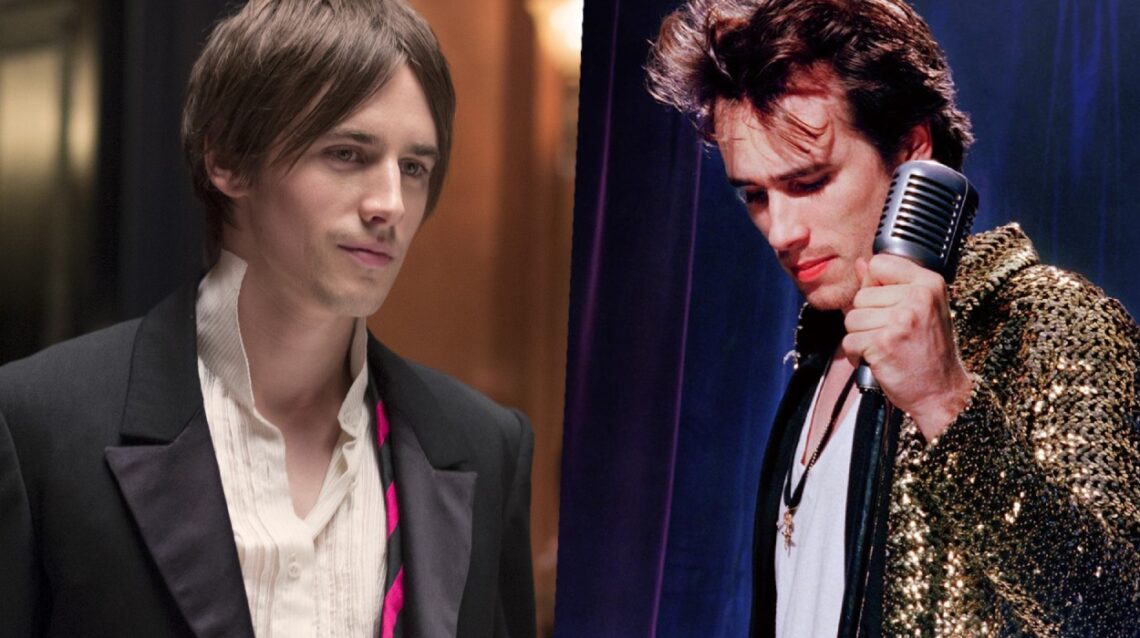
In the world of performing arts, few artists embody versatility and depth quite like Reeve Carney. Known for seamlessly blending acting, music, and theater, Carney has carved a place for himself as one of the most dynamic talents of his generation. Whether commanding a Broadway stage, transforming into complex characters on screen, or creating soul-stirring music, his journey reflects both passion and persistence.
Reeve Carney – The Journey of a Modern Renaissance Artist
Born on April 18, 1983, in New York City’s creative West Village, Reeve Carney grew up surrounded by art and sound. His father, John Carney, was a songwriter and commercial composer, while his mother, Marti Heil-Carney, worked as an actress and singer. Artistic energy flowed through the household, influencing his early love for performance. Adding to that lineage, Reeve’s great-uncle was none other than Art Carney, the Academy Award-winning actor from Harry and Tonto.
From an early age, Reeve displayed an aptitude for music. He learned to play guitar and piano, singing with a natural tone that blended rock and soul. His childhood in Manhattan, combined with his move to Los Angeles, placed him at the crossroads of both classical performance and modern pop culture.
He attended the Alexander Hamilton High School Academy of Music and later studied jazz guitar at the prestigious Thornton School of Music at the University of Southern California. These formative years helped him master not just performance but composition—skills that would later define his unique artistic identity.
Finding His Voice in Music
Before his acting career took flight, music was Reeve Carney’s first language. In his early twenties, he formed a rock band called Carney with his brother Zane Carney, drummer Jon Epcar, and bassist Aiden Moore. The group quickly gained a loyal following for their fusion of rock, blues, and jazz. Their debut album, Mr. Green Vol. 1, showcased Reeve’s distinct vocal style and intricate guitar work.
The band toured extensively, opening for legends such as The Veronicas and John Mayer. Their sound—melodic yet raw—captured the energy of a generation seeking authenticity in music. Reeve’s ability to combine lyrical storytelling with dynamic instrumentation hinted at his eventual success on the Broadway stage.
Even as his acting career flourished, he never let go of his musical roots. His solo album Youth Is Wasted, released years later, blended poetic lyricism with lush arrangements, revealing a songwriter who crafts emotion as deftly as he delivers it on stage.
The Leap to Broadway Stardom
While Reeve Carney was already respected in the Los Angeles music scene, his transition to Broadway would catapult him into international fame. In 2010, he landed the coveted role of Peter Parker/Spider-Man in Spider-Man: Turn Off the Dark.
The production, directed by Julie Taymor with music by Bono and The Edge of U2, was one of Broadway’s most ambitious and technically challenging shows. Carney’s portrayal of the teenage superhero blended vulnerability and heroism, grounded in his natural musicality and physicality. The role demanded not only vocal strength but also agility—he performed high-flying stunts eight shows a week.
The experience was transformative. It pushed his creative boundaries and earned him recognition as both a musician and actor capable of carrying a blockbuster Broadway production. Audiences were captivated by his ability to balance the duality of Peter Parker’s humility and Spider-Man’s courage.
After the show’s run, Reeve Carney became a Broadway mainstay, admired for his dedication and discipline in live performance—a medium that demands every ounce of authenticity.
A New Chapter with Hadestown
If Spider-Man introduced Reeve Carney to Broadway fame, Hadestown cemented his legacy. In 2019, he took on the role of Orpheus in Anaïs Mitchell’s Tony Award-winning musical—a retelling of the ancient Greek myth of Orpheus and Eurydice set in a Depression-era, jazz-infused world.
His portrayal of Orpheus was hauntingly beautiful. Combining a delicate vocal tone with emotional intensity, Carney breathed life into a dreamer determined to defy death itself. Critics praised his performance for its sincerity and soul, while audiences were swept up by his magnetic stage presence.
The role demanded a blend of actor and musician—a storyteller who could use song to move the narrative. For Carney, it was the perfect fit. The ethereal melodies, poetic lyrics, and emotional storytelling resonated with his own artistic sensibilities.
Hadestown became one of Broadway’s biggest sensations, earning multiple Tony Awards, including Best Musical. Reeve’s contribution as the original Orpheus remains iconic—a fusion of myth, music, and raw human emotion that continues to captivate audiences worldwide.
Screen Roles and Expanding Horizons
Beyond the stage, Reeve Carney’s screen work has demonstrated equal range and depth. His breakout television role came in Showtime’s gothic horror series Penny Dreadful (2014–2016), where he played Dorian Gray—a character both timeless and tormented.
Carney’s interpretation of Gray, the eternally youthful aesthete, was strikingly nuanced. He balanced charm and darkness, giving the classic literary figure a contemporary edge. His performance garnered critical acclaim, proving that his talents extended far beyond the theater.
He later appeared in the television adaptation of The Rocky Horror Picture Show: Let’s Do the Time Warp Again (2016), where he played Riff Raff. With his distinctive voice and theatricality, Carney paid homage to the cult classic while making the role uniquely his own.
He has also appeared in films such as The Tempest (2010), directed by Julie Taymor, and continues to lend his talents to both independent projects and large-scale productions.
Each role—on stage or screen—reveals his chameleon-like ability to inhabit characters with depth and authenticity.
A Musician at Heart
Despite his acting accolades, Reeve Carney has always identified first and foremost as a musician. His creative process often begins with melody. He writes and records between projects, maintaining a close connection to his craft as a songwriter.
His music is rich with narrative. Songs like “Rescue” and “Think of You” showcase his lyrical introspection and his knack for storytelling through sound. Whether performing live with a full band or acoustically in an intimate setting, Carney radiates a genuine connection with his audience.
His musical influences range from classic rock legends like Jeff Buckley and The Beatles to jazz and soul. That eclecticism is what makes his sound hard to pin down yet universally resonant.
In interviews, Carney often describes music as his “emotional compass.” It’s how he processes life’s complexities—turning experiences into rhythm, pain into poetry, and joy into melody.
Personal Life and Philosophy
Beyond the stage lights and cameras, Reeve Carney remains remarkably grounded. Known for his humility and thoughtfulness, he approaches fame not as a destination but as a platform for expression.
His relationship with actress Eva Noblezada, his Hadestown co-star, has often drawn public interest, yet Carney prefers to keep his personal life relatively private. What’s evident, however, is his appreciation for authenticity—both in art and life.
In numerous conversations, Carney has emphasized the importance of staying true to one’s creative instincts. He views artistry as a lifelong journey rather than a pursuit of perfection. His calm demeanor and introspective nature reflect that philosophy.
Legacy and Ongoing Influence
At just over forty years old, Reeve Carney has already achieved more than many artists do in a lifetime, yet his career still feels like it’s unfolding. His path—from an independent musician to a Broadway sensation and screen performer—embodies artistic courage.
He has inspired a new generation of performers who aspire to merge disciplines instead of choosing between them. In a creative landscape often defined by specialization, Carney proves that versatility can be a strength, not a limitation.
Every project he touches carries his signature blend of sincerity, precision, and heart. Whether through a haunting ballad, a mythic role, or a cinematic character, he leaves audiences with something lasting—an emotional resonance that lingers long after the performance ends.
Conclusion
In the story of Reeve Carney, one finds a rare alchemy of talent, discipline, and imagination. He represents what happens when art is lived, not just performed. From his early musical experiments to his triumphs on Broadway, from his soulful songs to his complex screen portrayals, Carney continues to redefine what it means to be a true artist in the modern age.
His journey reminds us that success is not about fame alone—it’s about authenticity, exploration, and dedication to craft. Every note he sings, every character he inhabits, and every story he tells carries a piece of his creative soul.
In a world that often demands conformity, Reeve Carney remains an artist apart: endlessly curious, fearlessly expressive, and profoundly human.